



Key Takeaways
- Autoimmune hepatitis does not progress at the same rate in every person.
- Untreated disease may lead to fibrosis, cirrhosis, liver failure, or the need for liver transplantation.
- Early diagnosis and treatment can significantly slow disease progression.
- Many people with autoimmune hepatitis achieve long-term remission with medication.
- Regular blood tests and liver monitoring help identify progression before serious complications develop.
Autoimmune hepatitis (AIH) is a chronic liver disease that occurs when the immune system mistakenly attacks healthy liver cells, causing ongoing inflammation. While some people experience mild disease that remains stable for years, others may develop significant liver damage within a relatively short period.
One of the most common questions after an autoimmune hepatitis diagnosis is how quickly the condition progresses. The answer varies from person to person and depends on factors such as disease severity, treatment response, age, and how early the condition is diagnosed.
Understanding the progression of autoimmune hepatitis can help patients recognise potential symptoms, appreciate the importance of regular monitoring, and make informed decisions about treatment.
Does autoimmune hepatitis always progress at the same rate?
No, autoimmune hepatitis does not always progress at the same rate. Some people experience mild inflammation that remains stable for many years, while others develop a more aggressive disease that causes liver damage over a much shorter period.
The progression of autoimmune hepatitis depends on several factors, including the severity of inflammation at diagnosis, how quickly treatment begins, how well a person responds to medication, and whether fibrosis is already present. In some cases, people have few noticeable symptoms despite significant inflammation occurring within the liver.
This variability is one reason why regular monitoring is so important. Blood tests, imaging studies and specialist reviews help doctors identify changes in disease activity and adjust treatment when necessary.
How quickly can autoimmune hepatitis cause liver damage?
There is no single timeline for how fast autoimmune hepatitis causes liver damage. In some people, inflammation develops slowly over many years, while others may experience more rapid disease progression, leading to fibrosis or cirrhosis within a relatively short period if left untreated.
The condition occurs when the immune system attacks healthy liver cells, causing chronic inflammation. Over time, this ongoing inflammation can damage liver tissue and trigger the formation of scar tissue, known as fibrosis. As fibrosis becomes more extensive, the risk of cirrhosis and liver dysfunction increases.
For some people, autoimmune hepatitis is only discovered after advanced liver damage has already developed. Others are diagnosed early through abnormal liver function tests before significant scarring occurs. This is why prompt diagnosis and treatment play such an important role in protecting long-term liver health.
Factors that influence disease progression
Autoimmune hepatitis can progress differently from one person to another. While some people experience mild disease that remains stable for years, others develop fibrosis, cirrhosis or liver failure more quickly. Understanding the factors that influence progression can help patients and doctors make informed decisions about treatment and monitoring.
- Symptoms and severity
- Medical history
- Medication response
- Type of disease
Severity of inflammation at diagnosis
The degree of liver inflammation present when autoimmune hepatitis is diagnosed is one of the strongest predictors of disease progression. More severe inflammation can accelerate liver damage and increase the risk of fibrosis if not brought under control.
How early treatment begins
Prompt treatment can significantly reduce inflammation and help prevent ongoing damage to liver cells. Delays in diagnosis or treatment may allow the disease to progress further before it is controlled.
Response to medication
Many people with autoimmune hepatitis respond well to corticosteroids such as prednisone and immunosuppressive medicines such as azathioprine. Achieving remission reduces ongoing inflammation and lowers the risk of long-term liver damage.
Presence of fibrosis or cirrhosis
Some patients already have fibrosis or cirrhosis at the time of diagnosis. Existing liver scarring can affect prognosis and may increase the likelihood of complications, even when inflammation is successfully treated.
Disease flares and remission
Autoimmune hepatitis often follows a pattern of flare-ups and remission. Frequent or poorly controlled flares can contribute to additional liver damage over time, while sustained remission is associated with better long-term outcomes.
Other autoimmune and liver conditions
People with autoimmune hepatitis may also have other autoimmune disorders, such as rheumatoid arthritis, coeliac disease, ulcerative colitis or autoimmune thyroid disease. Additional liver conditions or metabolic risk factors may further affect disease progression.
Type of autoimmune hepatitis
There are two main types of autoimmune hepatitis. Type 1 autoimmune hepatitis is the most common form and can occur at any age. Type 2 autoimmune hepatitis is less common and is more frequently diagnosed in children and young adults. Individual disease behaviour varies, regardless of type.
What happens if autoimmune hepatitis is left untreated?
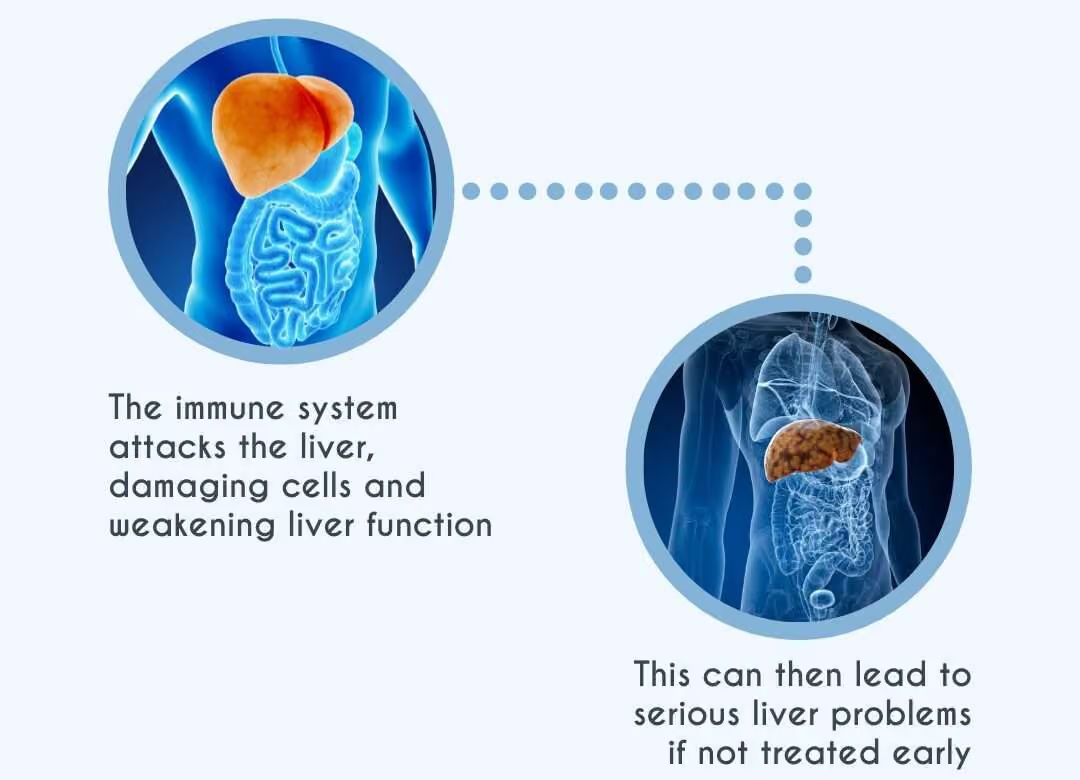
Untreated autoimmune hepatitis can lead to ongoing liver inflammation, increasing the risk of permanent liver damage over time. Because the immune system continues to attack healthy liver cells, inflammation may gradually progress to fibrosis, cirrhosis, and, in severe cases, liver failure.
The rate of progression varies between individuals. Some people experience slow disease progression over many years, while others develop significant liver scarring more rapidly. Unfortunately, symptoms do not always reflect the extent of liver damage. Some patients feel relatively well despite having advanced disease.
As liver damage worsens, the risk of serious complications increases. These complications can affect both liver function and overall health, making early diagnosis and treatment essential.
The progression from inflammation to fibrosis and cirrhosis
Although the exact cause of autoimmune hepatitis is not fully understood, it is believed that a combination of genetic predisposition and environmental triggers may contribute to why some people develop autoimmune hepatitis.
People who are more likely to develop autoimmune hepatitis often have a personal or family history of another autoimmune disease, such as coeliac disease or type 1 diabetes. The condition is also more common in females than in males. Certain medications, including nitrofurantoin and minocycline, as well as some infections or viral infections, may trigger autoimmune hepatitis in susceptible individuals. However, autoimmune hepatitis is different from viral hepatitis, which is caused by a virus rather than an immune response.
As the disease progresses, persistent inflammation can lead to increasing levels of liver damage. Understanding this process helps explain why early diagnosis and treatment are so important.
Stage 1: Ongoing inflammation
In autoimmune hepatitis, the immune system attacks liver cells and causes inflammation within the liver. Blood tests may detect elevated liver enzymes, while additional testing may identify specific antibodies such as anti-smooth muscle antibodies, which can support an autoimmune hepatitis diagnosis.
At this stage, some people experience symptoms of autoimmune hepatitis such as:
- Fatigue
- Abdominal discomfort
- Joint pain
- Nausea
- Jaundice
- Itchy skin
Others may have few or no symptoms despite active inflammation.
Stage 2: Fibrosis develops
When inflammation continues over time, the liver attempts to repair itself. This healing process can result in fibrosis, where scar tissue gradually replaces healthy liver tissue.
Fibrosis may not cause obvious symptoms, but it signals that the disease is progressing. Without effective treatment, fibrosis can continue to build and reduce the liver's ability to function normally.
Stage 3: Cirrhosis develops
As scarring becomes more extensive, fibrosis can progress to cirrhosis. At this point, permanent structural changes occur within the liver, and the risk of complications increases significantly.
When the disease becomes advanced, patients may develop:
- Ascites (fluid build-up in the abdomen)
- Esophageal varices (enlarged veins that can bleed)
- Worsening jaundice
- Fatigue and weakness
- Reduced liver function
Stage 4: Advanced liver disease
If inflammation remains uncontrolled for many years, autoimmune hepatitis can cause serious damage and eventually lead to liver failure. In severe cases, patients may need a liver transplant to restore liver function and improve long-term outcomes.
The good news is that many people with AIH never reach this stage. Treatment with medications such as corticosteroids, including prednisone, or alternatives such as budesonide, often helps control inflammation, reduce the need for high-dose steroid therapy, and slow disease progression.
Signs that autoimmune hepatitis may be progressing
Autoimmune hepatitis can progress silently, but some signs may indicate worsening liver inflammation or increasing liver damage. It's important to discuss any new or changing symptoms with your specialist.
Common signs of disease progression include:
- Increasing fatigue
- Persistent abdominal discomfort
- Worsening jaundice
- Unexplained weight loss
- Swelling in the abdomen (ascites)
- Easy bruising or bleeding
- Rising liver enzyme levels on blood tests
In some cases, progression is detected through monitoring before noticeable symptoms develop. Regular follow-up with a gastroenterologist or hepatologist helps identify changes early and guide treatment adjustments.
Can autoimmune hepatitis go into remission?
Yes, many people with autoimmune hepatitis can achieve remission with appropriate treatment. Remission occurs when liver inflammation is well controlled, liver enzyme levels return to normal, and symptoms improve or disappear.
Treatment typically involves medications that suppress the immune system, such as corticosteroids and immunosuppressants. These medicines help reduce inflammation and prevent further liver damage.
However, remission does not mean the condition has been cured. Autoimmune hepatitis is a chronic disease, and some people may experience flare-ups if treatment is reduced or stopped. For this reason, ongoing monitoring remains important even when the disease appears stable.
How doctors monitor disease progression over time

Regular monitoring helps doctors assess how active autoimmune hepatitis is, whether treatment is working, and whether liver damage is developing or worsening over time.
A gastroenterologist or hepatologist will typically use a combination of blood tests, imaging and clinical reviews to track disease progression and adjust treatment when needed.
Common monitoring methods
- Liver function tests to assess inflammation and liver health
- Autoantibody testing to support diagnosis and disease assessment
- Imaging scans, such as ultrasound or FibroScan®, to evaluate liver scarring
- Liver biopsy in selected cases to assess inflammation and fibrosis
- Regular reviews of symptoms, medications and treatment response
Why early detection and ongoing monitoring matter
Early detection gives doctors the best opportunity to control autoimmune hepatitis before significant liver damage occurs. Because symptoms can be mild or absent in the early stages, some people are diagnosed only after fibrosis or cirrhosis has already developed.
Regular monitoring allows specialists to identify changes in disease activity, assess treatment effectiveness and detect complications before they become serious. It also helps ensure medications are adjusted when needed to maintain remission and protect long-term liver health.
For many people, early diagnosis and consistent follow-up can significantly reduce the risk of fibrosis, cirrhosis, liver failure and the need for a liver transplant.
Can treatment slow or prevent disease progression?
Yes, treatment can significantly slow disease progression and, in many cases, prevent autoimmune hepatitis from causing serious liver damage. The primary goal of treatment is to reduce inflammation, protect healthy liver cells and achieve long-term remission.
Most people are treated with corticosteroids, such as prednisone or budesonide, often alongside immunosuppressive medications such as azathioprine. These medications help suppress the immune system and reduce the ongoing attack on the liver.
When treatment is started early, and inflammation is well controlled, many patients can avoid progression to fibrosis, cirrhosis or liver failure. However, treatment does not reverse all existing liver scarring, which is why early diagnosis remains so important.
The bottom line on autoimmune hepatitis progression
So, how fast does autoimmune hepatitis progress? The answer varies from person to person. Some people experience slow disease progression over many years, while others may develop fibrosis, cirrhosis or serious liver complications more quickly if inflammation remains uncontrolled.
The most important factors influencing progression are the timing of diagnosis, the severity of liver inflammation, and the disease's response to treatment. With appropriate medical care, many people with autoimmune hepatitis achieve remission and maintain good liver health for the long term.
Although autoimmune hepatitis is a chronic condition, it does not always lead to severe liver damage. Regular monitoring, specialist care and adherence to treatment can significantly reduce the risk of complications and help prevent progression to liver failure or the need for a liver transplant.
Disclaimer
This article is intended for general educational purposes only and should not be considered medical advice. The information provided does not replace consultation, diagnosis or treatment from a qualified healthcare professional.
Speak with a liver specialist about autoimmune hepatitis
If you have questions about autoimmune hepatitis, disease progression or treatment options, Moonee Valley Specialist Centre can help. Our specialists can assess your symptoms, review your liver health and guide you through monitoring and treatment options tailored to your needs.


Registered nurse and director focused on patient support, education and delivering a welcoming, family-oriented care experience.